















Twitter
LINKEDIN
Gab
Telegram
Brighteon
Snapchat
Rumble
MeWe
BitChute
GETTR
TikTok
Reddit
SubStack
Truth Social

Get Erin's Book Free

Sign up for Updates!

Author: Erin Elizabeth

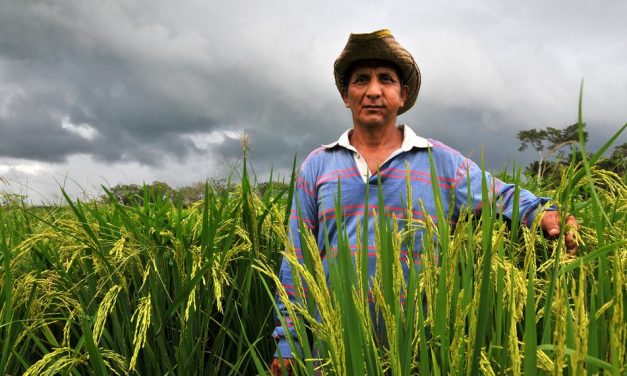
Bolivia to be completely food independent in 2020 by investing in small farmers

Not only are big concentrated animal feeding operation’s (CAFO) contributing to environmental decline but they are not helping with food security. And neither is all that GM corn and rice. While the “U.N.-led 2030 Agenda for Sustainable Development,” which launched in September 2015 wants you to think that it will take another 15 years before we make any substantial progress, the Government of Bolivia has called bully. RELATED STORY: A planet in crisis: Here’s how you can help By investing $40 million to support small and medium farmers in food production, the “Deputy Minister of Rural Development and Agriculture, Marisol Solano,...

Read More

Pedophile with grotesque images of child and animal abuse walks free – again

George Hobson of Gosforth, UK, a pedophile, has somehow been spared from going to prison AGAIN “despite admitting to downloading hundreds of vile images for a second time.”1 And yes, his stash included the most serious of child images, those labeled Category A, some of which showed penetrative activity. All told, he had 700 indecent images. After the court heard Hobson admit he was attracted to children, and after he admitted to the images he had (which breached a suspended sentence for a similar offense), a judge spared him citing his “highly unusual circumstances”.1 WHAT? “He was handed the exact same...

Read More

Demonized in the 1960s, today a renaissance for depression and anxiety

In the video below, Tim Ferriss interviews Michael Pollan, author of seven books, primarily related to food. In his latest book, “How to Change Your Mind: What the New Science of Psychedelics Teaches Us about Consciousness, Dying, Addiction, Depression, and Transcendence,” he delves into the potential benefits of hallucinogenic drugs. The interview took place at the recent South by Southwest event. As noted by Pollan, the term “psychedelics” was coined in 1957 by Humphry Osmond, a psychiatrist who explored the use of hallucinogenic drugs in the treatment of mental illness. A paper by Janice Hopkins Tanne describes how Osmond investigated the effects of lysergic acid diethylamide (LSD) on alcoholics. In the 1950s, psychiatrists working with drugs would often use them on themselves, and hallucinogenics such as LSD were thought to mimic the mind of the mentally ill, allowing the therapist to experience what a psychotic patient might be going through. However, Pollan notes, they realized that the experiences they were having “felt far too good” to be pure psychosis. RELATED STORY: Magic Mushroom Drug Lifted Depression/Anxiety in Cancer Patients Hence Osmond came up with the term psychedelic, which is made up of the two words “psyche” (mind) and “delos,” a Greek word meaning to manifest or reveal. In essence, the drugs “reveal the mind.” “It suggests these drugs bring the mind into a kind of observable space,” Pollan says....

Read More

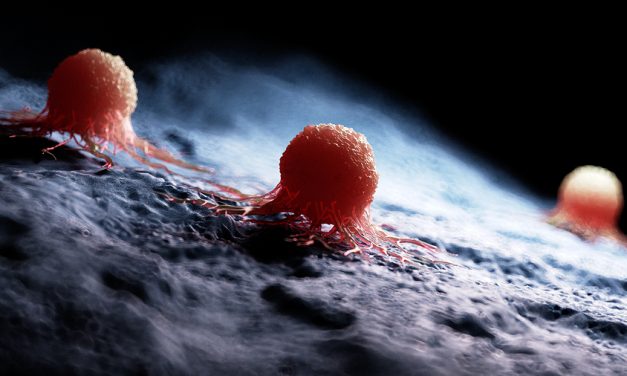
BBC: Scientists dismantle cancer, revealing weak spots to find new effective treatments

A team at the Wellcome Sanger Institute, UK have- with the help of CRISPR- taken cancer apart, piece-by-piece. One at a time, the team took apart every genetic instruction inside 30 types of cancer to reveal weaknesses. Six hundred to be exact. RELATED STORY: Study: Almost half of new cancer patients lose their entire life savings And each one could now be the target of a new drug Currently, standard cancer treatment is cut and burn, in broad general terms, meaning it affects the entire body. However, this study “heralds the future of personalized cancer medicine.”1 One of the...

Read More

Ecologists have this simple request to homeowners—plant native

Love Spring? Love it, even more, when the songbirds arrive? Have things been a bit silent in your yard? There’s a solution: plant native plants. “A newly released survey of Carolina chickadee populations in the Washington, D.C., metro area shows that even a relatively small proportion of nonnative plants can make a habitat unsustainable for native bird species. The study, published last week in Proceedings of the National Academy of Sciences, is the first to examine the three-way interaction between plants, arthropods that eat those plants, and insectivorous birds that rely on caterpillars, spiders and other arthropods as food...

Read More

Sign Up Now

Get Erin’s Book For Free